
BLS certification equips individuals with crucial skills to respond effectively during life-threatening emergencies, encompassing CPR, AED use, and airway management—a 25-question exam assesses readiness.
What is BLS?
Basic Life Support (BLS) represents the foundational level of medical care provided to individuals experiencing cardiac arrest or respiratory emergencies. It involves interventions like chest compressions, rescue breaths, and utilizing an Automated External Defibrillator (AED). BLS isn’t about advanced medical interventions; it’s about sustaining life until advanced medical personnel arrive.
Preparation often involves practice tests, with some available in PDF format, containing scenario-based questions and answers. A typical BLS exam, like Exam A, comprises 25 questions designed to evaluate competency in these core life-saving techniques.
Importance of BLS Certification
BLS certification is vitally important because it empowers individuals to confidently respond to life-threatening emergencies, potentially saving lives. It’s a crucial skill for healthcare professionals, first responders, and even concerned citizens. Knowing how to perform CPR and use an AED can dramatically increase survival rates before advanced medical help arrives.
Effective preparation, utilizing resources like BLS practice tests (often in PDF format) with questions and answers, is key to passing Exam A – a 25-question assessment of essential skills.

Understanding the BLS Exam Format
The BLS exam, often Exam A, consists of 25 multiple-choice questions designed to evaluate your understanding of basic life support principles and skills—PDF practice tests help!
Exam Structure: 25 Questions
BLS certification exams, like Exam A, typically feature a structured format comprising 25 distinct questions. These questions are meticulously crafted to assess a candidate’s comprehension of core basic life support principles. The exam’s design prioritizes evaluating practical knowledge application in emergency scenarios.
Many resources offer PDF practice tests mirroring this structure, allowing candidates to familiarize themselves with the exam’s style and content. These practice materials often include detailed answers and explanations, aiding in skill reinforcement. Successfully navigating these 25 questions demonstrates competency in life-saving techniques.
Types of Questions Included
BLS exams incorporate diverse question types to comprehensively evaluate candidate understanding. Expect multiple-choice questions focusing on CPR steps, AED operation, and emergency response protocols. Scenario-based questions present realistic situations requiring application of learned skills.
PDF practice tests often mirror this variety, including fill-in-the-blank and true/false questions. These resources, with provided answers, help prepare for recognizing cardiac arrest, performing chest compressions, and managing airway obstructions. Mastering these question formats is crucial for successful BLS certification.
Passing Score and Recertification
Typically, a minimum score of 80% is required to pass the 25-question BLS exam, demonstrating competency in essential life-saving skills. Successful candidates receive certification, usually valid for two years.
Recertification involves completing a renewal course and passing another exam, ensuring continued proficiency. PDF practice tests with answers are invaluable for review. Maintaining current BLS certification is vital for healthcare professionals, reinforcing their ability to respond effectively to emergencies and save lives.
Key Areas Covered in the BLS Exam
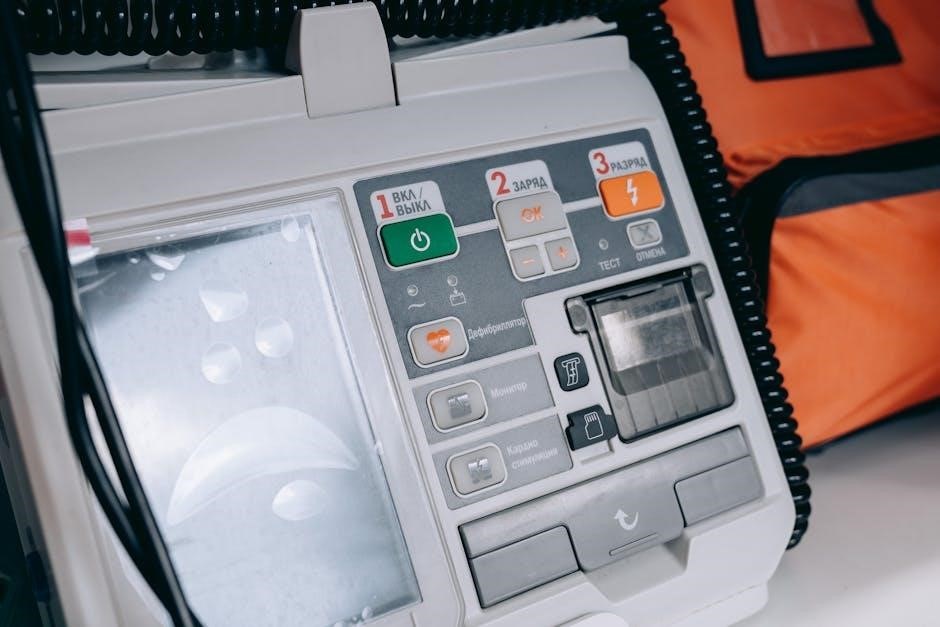
The BLS exam focuses on recognizing cardiac arrest, performing CPR on adults, children, and infants, and utilizing an AED effectively—practice tests help!
Cardiac Arrest Recognition
BLS exam preparation heavily emphasizes swift and accurate cardiac arrest identification. Recognizing the signs – unresponsiveness, absence of breathing, or only gasping – is paramount. Candidates must understand the immediate steps: activating the emergency response system and initiating CPR.
Exam questions frequently present scenarios requiring differentiation between cardiac arrest and other emergencies. Mastery of pulse checks (though not recommended for lay rescuers) and assessing breathing patterns are crucial. Practice tests, often available in PDF format, reinforce this vital skill, ensuring a confident and effective response during a real-life crisis. Understanding the chain of survival is also key.
Adult CPR Techniques
BLS certification exams thoroughly assess proficiency in adult CPR. Proper hand placement – center of the chest – and compression depth (at least 2 inches, but not exceeding 2.4 inches) are critical. The correct compression rate, 100-120 compressions per minute, is frequently tested.
PDF practice tests often include scenario-based questions demanding application of these techniques. Candidates must demonstrate understanding of the 30:2 compression-to-ventilation ratio. Effective rescue breaths, ensuring visible chest rise, are also evaluated. Mastering these skills, reinforced through practice, is essential for successful exam completion and real-world application.
Child CPR Techniques
BLS exams dedicate significant attention to child CPR, differing from adult protocols. Compressions utilize one or two hands, depending on the child’s size, aiming for approximately 2 inches of chest compression depth. Maintaining the 100-120 compressions per minute rate remains crucial, often tested via scenario-based questions in PDF practice materials.
The compression-to-ventilation ratio shifts to 30:2 for single rescuers, and 15:2 with two rescuers. Proper head-tilt/chin-lift maneuvers are vital. PDF practice tests emphasize recognizing the differences and applying appropriate techniques, ensuring candidates are prepared for varied emergency situations.
Infant CPR Techniques
BLS certification exams heavily assess infant CPR skills, differing significantly from adult and child techniques. Compressions utilize two fingers (or two thumbs encircling the chest) achieving roughly 1.5 inches of compression depth, tested through scenario questions in PDF practice materials. The rate remains 100-120 compressions per minute.
A 30:2 compression-to-ventilation ratio applies for both single and two-rescuer scenarios. Gentle head-tilt/chin-lift is crucial, avoiding overextension. PDF practice tests emphasize recognizing unique infant anatomy and adapting techniques accordingly, preparing candidates for real-life emergencies.

Essential BLS Skills Assessed
BLS exams rigorously evaluate chest compressions, rescue breaths, and AED operation—skills vital for effective emergency response, often tested via PDF practice questions.
Chest Compressions: Rate and Depth
BLS guidelines emphasize consistent, high-quality chest compressions as foundational to effective CPR. The exam assesses knowledge of the correct compression rate—100 to 120 compressions per minute—and appropriate depth, which is at least 2 inches (5 cm) for adults.
Understanding recoil is also crucial; allowing the chest to fully recoil after each compression optimizes blood flow. Practice tests, often available as PDFs, frequently include scenario-based questions testing these parameters. Mastery of these skills, verified through the BLS exam, significantly improves patient outcomes during cardiac arrest.
Rescue Breaths: Proper Technique
Effective rescue breaths are integral to BLS, delivering oxygen to the victim’s lungs. The BLS exam evaluates understanding of proper technique: ensuring an open airway using head-tilt/chin-lift, creating a tight seal over the mouth and nose, and delivering breaths over one second, observing for visible chest rise.
PDF practice tests often present scenarios requiring candidates to identify correct breath delivery. Current guidelines emphasize minimizing interruption to chest compressions; a 30:2 compression-to-breath ratio is standard for adults. Correct technique, assessed via the exam’s 25 questions, is vital for successful resuscitation.
AED Operation and Safety
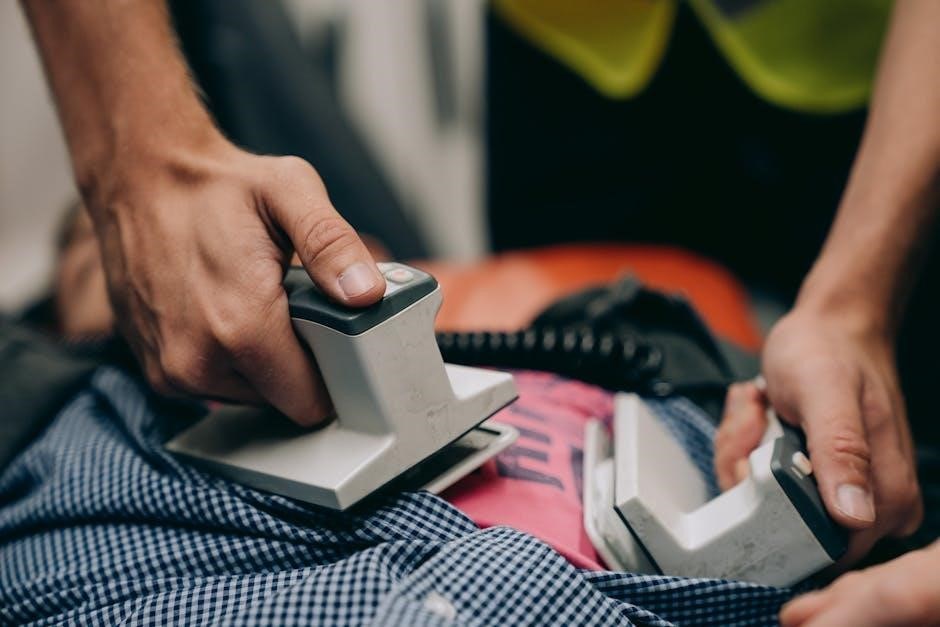
Automated External Defibrillators (AEDs) are crucial in BLS, and the exam assesses knowledge of safe and effective operation. This includes understanding when to use an AED – for shockable rhythms – and proper pad placement on the chest. PDF practice tests frequently feature scenarios requiring correct AED usage decisions.
Safety is paramount; ensuring the area is clear before delivering a shock is vital. The 25 questions on the BLS exam will test understanding of AED maintenance, troubleshooting, and recognizing contraindications. Proper AED operation significantly increases survival rates during cardiac arrest.
Common BLS Exam Questions & Answers
BLS exams often present scenario-based questions, testing practical application of skills; PDF resources provide sample questions and detailed answers for effective preparation.
Scenario-Based Questions
BLS exams heavily feature scenario-based questions, demanding critical thinking and practical skill application in simulated emergencies. These questions present realistic situations—like a sudden cardiac arrest or choking incident—requiring candidates to outline the correct sequence of actions.
PDF study guides and practice tests often include numerous such scenarios, complete with detailed answers and rationales. Mastering these scenarios is vital, as they assess your ability to prioritize steps, effectively communicate with a team, and provide appropriate interventions. Expect questions requiring you to determine the next best action based on patient presentation and available resources.
Questions on Emergency Response Systems
BLS exams frequently assess understanding of effective emergency response system activation. Questions probe knowledge of when and how to call for advanced medical help, including proper dispatch information and clear communication of the situation.
PDF practice materials emphasize the importance of early CPR and AED use while simultaneously activating the emergency response system. Expect questions regarding roles within a rescue team, chain of survival concepts, and legal considerations. Correct answers demonstrate a grasp of coordinated efforts for optimal patient outcomes, reflecting real-world emergency protocols.

Questions on Airway Management
BLS exams heavily feature airway management scenarios, testing your ability to open and maintain a clear airway. Questions assess techniques like head-tilt/chin-lift and jaw-thrust maneuvers, crucial for effective ventilation. PDF practice tests often present situations requiring foreign body removal, emphasizing proper procedures.
Expect inquiries about recognizing airway obstructions and utilizing adjuncts like oropharyngeal or nasopharyngeal airways. Correct answers demonstrate understanding of anatomical landmarks and potential complications. Mastery of these skills, as reflected in the exam, is vital for successful CPR and rescue breathing.
Resources for BLS Exam Preparation
BLS preparation benefits from PDF practice tests, comprehensive study guides, and online courses—all designed to reinforce skills and boost confidence for the exam.
BLS Practice Tests (PDF Format)
PDF-based BLS practice tests are invaluable tools for exam preparation, offering a convenient and accessible way to assess your knowledge. These tests typically mirror the format and content of the actual Basic Life Support certification exam, often featuring around 20 to 25 multiple-choice questions.
Focus areas include cardiac arrest recognition, CPR techniques for adults, children, and infants, AED operation, and emergency response protocols. Utilizing these practice tests allows candidates to identify knowledge gaps and refine their skills. Many resources provide answer keys and detailed explanations, enhancing the learning process and solidifying understanding before the official assessment.
CPR/AED/First Aid Study Guides
Comprehensive CPR/AED/First Aid study guides are essential companions for BLS certification candidates, providing a structured approach to mastering life-saving techniques. These guides detail crucial concepts like chest compression depth and rate, proper rescue breathing methods, and AED operational safety.
They often include scenario-based questions mirroring those found on the Basic Life Support exam, aiding in practical application of knowledge. Many guides also cover emergency response system activation and airway management protocols. Supplementing practice tests with thorough study guide review significantly improves preparedness and confidence for the 25-question assessment.
Online BLS Training Courses
Numerous online BLS training courses offer flexible and accessible preparation for certification, often incorporating interactive modules and video demonstrations. These courses cover essential skills like adult, child, and infant CPR techniques, alongside AED usage and emergency response protocols.
Many platforms provide practice quizzes and simulated exams, including formats similar to the 25-question Basic Life Support assessment. Look for courses aligned with recognized guidelines and offering downloadable resources, such as study guides and practice test PDFs, to maximize learning and exam readiness.
Optimizing BLS Practice Test PDFs
Optimizing BLS practice test PDFs ensures efficient studying; smaller file sizes and searchable text enhance accessibility for quick question review and learning.
PDF Optimization Techniques
PDF optimization for BLS practice tests involves several key techniques to enhance usability and accessibility. Reducing file size is paramount, achieved through image compression and removing unnecessary elements. Employing Optical Character Recognition (OCR) transforms scanned images into searchable text, facilitating quick question lookups.
Furthermore, tagging PDFs with metadata improves organization and searchability. Linearizing PDFs allows for faster opening and viewing. Ensuring compatibility across various devices and PDF readers is crucial. Properly optimized PDFs containing a 25-question BLS exam, with answers, become invaluable study resources.
Accessibility of PDF Materials
Ensuring BLS practice PDFs, including those with a 25-question exam and answers, are accessible is vital for all learners. This involves incorporating alternative text for images, allowing screen readers to convey visual information. Proper heading structures enhance navigation for users with disabilities.
Using sufficient color contrast improves readability. Tagging the PDF with semantic elements clarifies content organization. Confirming PDF/A compliance guarantees long-term accessibility. Accessible PDFs empower everyone to effectively prepare for their BLS certification, regardless of ability.

Frequently Asked Questions About BLS
Common inquiries involve BLS versus ACLS distinctions and certification validity; practice tests, like a 25-question exam PDF, aid preparation.
BLS vs. ACLS: What’s the Difference?
Basic Life Support (BLS) focuses on foundational skills for anyone encountering a cardiac arrest or breathing emergency, utilizing CPR, AEDs, and basic airway management—often assessed via a 25-question certification exam available as a PDF study resource.
Conversely, Advanced Cardiovascular Life Support (ACLS) is designed for healthcare professionals, building upon BLS with advanced interventions like pharmacology and complex rhythm interpretation. While a BLS exam tests fundamental competency, ACLS certification demands a higher level of clinical expertise and critical thinking skills.
BLS Certification Validity Period
Basic Life Support (BLS) certifications typically remain valid for two years. Maintaining current skills is crucial, necessitating recertification before expiration—often involving a renewal course and potentially a condensed exam, sometimes available as a convenient PDF practice test with questions and answers.
Regular updates to guidelines emphasize the importance of ongoing training. A lapsed certification requires completing a full BLS course, including both cognitive assessment (like the 25-question exam) and skills demonstration, ensuring providers are prepared for emergency situations.